October 20, 2026
Basement Waterproofing for Homes Near Lakes, Rivers, and Wetlands
By @andressaab203
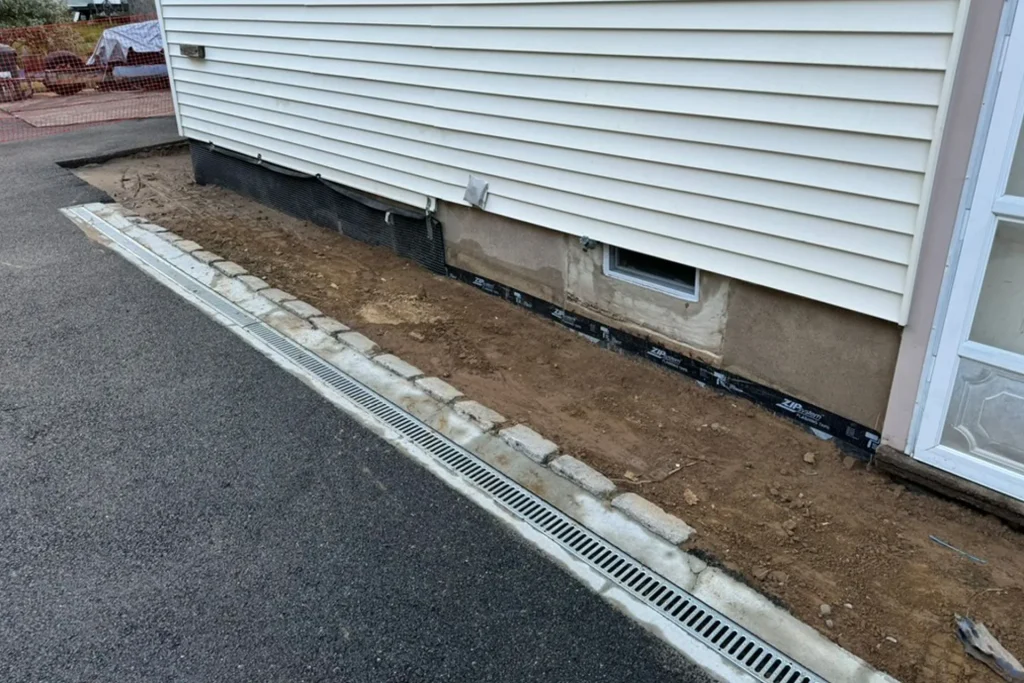

Homes built near lakes, rivers, marshes, and protected wetlands often come with the views people want and the moisture problems they do not. A walkout basement overlooking the water can feel like the best room in the house in October. By April, that same basement may smell damp, show white mineral staining on the walls, or take on water after a week of heavy rain and snowmelt.
Basement Waterproofing in these areas is rarely a one-part fix. The ground behaves differently near a water body than it does on a dry inland lot. Water tables tend to run higher. Soil can stay saturated for long stretches. Seasonal swings matter more. Municipal drainage rules are often stricter. In some waterfront neighborhoods, one poorly managed downspout can overwhelm an older foundation wall or contribute to seepage along a footing line that had stayed dry for years.
I have seen two homes on the same street, built within a decade of each other, perform very differently simply because one sat on sandy glacial soils and the other on a heavier silty clay closer to a cattail wetland. The first drained quickly but allowed water to race toward the foundation if the grading was poor. The second held water like a bowl. Both had basement leaks, but not for the same reasons, and not with the same solution.
That is the first point worth making clearly. If your home is near a lake, river, or wetland, the right waterproofing strategy depends less on the symptom you see inside and more on the water behavior outside.
Why waterfront and wetland-adjacent basements are harder to keep dry
A basement stays dry when several things go right at once. Surface water has to move away from the house. Soil around the foundation has to drain or at least not stay overloaded. Groundwater pressure has to remain manageable. The wall and floor system has to resist moisture movement. If any one of those fails, the basement can show distress. Near water, more than one of them often fails at the same time.
The biggest difference is hydrostatic pressure. That is simply water pushing against foundation walls and floors when the surrounding soil is saturated. In neighborhoods farther from water, that pressure may rise only during storm events or spring thaw. Near a river or wetland, it can remain elevated for much longer. A basement wall might look sound for years, then begin to leak at a cold joint, a tie-rod hole, or the wall-floor seam after one unusually wet season because the pressure stayed high longer than the original construction details could tolerate.
Topography also matters. A lot that appears flat can still direct water toward the house in subtle ways. I often see homes where the backyard falls gently toward the lake, but a shallow swale or compacted path along the house traps runoff. Homeowners assume the property drains well because the view side slopes downward. Meanwhile, the foundation sees standing water at its least visible side.
Wetland areas bring another complication. Regulations may limit grading changes, tree removal, discharge locations, and excavation work. That does not make effective Basement Waterproofing impossible, but it does mean the best fix has to respect site constraints. A contractor who treats every leaking basement the same way can create bigger problems, especially if they alter drainage patterns near protected land without understanding local requirements.
The signs are usually subtle before they become expensive
A basement rarely jumps from perfectly dry to ankle-deep water without warning. The warning signs are usually easy to dismiss.
The air changes first. It feels cool and slightly sticky even when the rest of the house is comfortable. Then there may be a faint earthy smell, especially near stored cardboard, finished wall corners, or under stair landings. Efflorescence, the chalky white deposit left by evaporating moisture, often appears next. Hairline cracks may darken during wet weather. Paint or parge coats can blister. Luxury vinyl planks may begin to cup at seams if installed over a slab with rising moisture. In finished basements, homeowners often notice the symptom before the cause: a musty closet, a rusting metal table leg, or baseboards that swell at one end.
In waterfront homes, these clues deserve quick attention because moisture persistence matters more than a one-time leak. A single storm event can often be managed with cleanup and a repair. Chronic dampness is different. It slowly affects framing, insulation, floor coverings, indoor air quality, and mechanical systems. Once a basement has hidden mold growth behind finished walls, the repair cost rises sharply because demolition becomes part of the job.
Surface water is the first battle, and often the cheapest to win
The most effective waterproofing work often happens before anyone touches the foundation wall itself. Roof runoff, yard slope, hardscape runoff, and low spots near window wells all deserve close scrutiny. I have seen homeowners invest in interior drainage systems when the real culprit was a pair of downspouts discharging three feet from the house into compacted soil. After every rain, the water had nowhere to go except down along the foundation.
Good surface water control does not sound glamorous, but it solves a surprising number of basement moisture problems or at least reduces the burden on deeper systems. That includes grading the soil so water sheds away from the house, extending downspouts far enough to avoid recirculating water back to the footing area, and making sure patios, walks, and landscape beds do not trap runoff against the wall.
Near lakes and wetlands, discharge location takes extra care. You do not want to extend water to a point where it simply loops back downhill toward the house or erodes a bank. You also cannot assume you are free to reroute water into a protected area. Site planning needs judgment. What works on a suburban upland lot may violate local rules or worsen soil saturation on a waterfront lot.
When groundwater is the real problem
There is a point at which surface fixes are not enough. If the water table rises to or above the basement slab elevation during wet periods, water can come up through cracks, around floor penetrations, or at the cove joint where wall meets floor. In those cases, the issue is not a roof gutter or a flower bed. It is groundwater management.
That distinction matters because homeowners are often sold simple crack injections as a universal cure. Crack injection has its place. If one isolated wall crack leaks intermittently and the surrounding drainage is otherwise sound, a proper epoxy or polyurethane injection can work very well. But when seepage appears at multiple locations, or the floor itself is damp, or the basement only leaks during prolonged wet periods, the foundation is telling you that broader pressure relief is needed.
An exterior footing drain system can be highly effective if it is installed correctly and if the site allows excavation. The work is substantial. Soil is excavated to the footing, the wall is cleaned and waterproofed, drainage board may be added, drain tile is placed, and the trench is backfilled with drainage material. Done well, this addresses the water before it enters. It is often the gold standard, especially when an older foundation has no functional perimeter drain at all.
But exterior work is not always practical. Waterfront homes may have tight setbacks, mature trees, decks, utilities, stone retaining walls, or regulatory restrictions that make full excavation difficult or prohibitively expensive. In those situations, an interior drain tile system with a sump can be the more realistic choice. It does not stop water from reaching the outside of the wall, but it relieves pressure and captures intrusion in a controlled way before it spreads across the floor.
Interior versus exterior systems, and why neither is automatically better
People often want a simple answer to the question of interior versus exterior Basement Waterproofing. Realistically, each approach solves a different part of the problem.
Exterior systems are preventive. They aim to keep water away from the structure or move it downward into a controlled drainage path before it enters. Interior systems are management tools. They accept that water may reach the foundation and provide a route for collection and removal. In an ideal world, every wet basement would be fixed from the outside. In the real world, access, budget, construction type, and local site conditions influence the decision.
Here is a practical way to think about it:
- Choose exterior waterproofing when walls are accessible, excavation is feasible, and you want to address the source of wall seepage directly.
- Choose interior drainage when groundwater pressure is the main issue, exterior access is limited, or the basement needs reliable pressure relief without major disruption outside.
- Use both when the house has multiple failure points, such as poor wall protection, ineffective footing drainage, and a slab that sees seasonal water pressure.
- Prioritize diagnostics before products, because membranes, coatings, and pumps each fail when used for the wrong problem.
That last point is where many projects go sideways. A coating painted on an interior wall is not waterproofing in the full sense if active hydrostatic pressure remains outside. It may reduce vapor movement or temporarily improve appearance, but it is not a substitute for drainage. Likewise, a sump pump cannot compensate for chronic roof runoff dumped against the foundation.
Sump systems matter more near water than many homeowners realize
In inland neighborhoods, a sump pump might cycle occasionally during storms. Near rivers and wetlands, it may be a working mechanical system for months at a time. That changes how it should be designed.
A basic pump in a pit is not enough if the home depends on it regularly. Capacity, switch reliability, discharge routing, and backup power deserve real attention. I have seen basements stay dry through severe weather because the homeowner had a robust primary pump paired with a battery backup and an alarm. I have also seen finished basements flood during a power outage because the system had one undersized pump and no secondary protection.
The discharge line is just as important as the pump. In cold climates, that line has to avoid freezing. It must release water where it can drain away without cycling back toward the house or icing a walkway. In tightly regulated waterfront zones, the outlet location may need careful planning to avoid erosion or prohibited discharge patterns.
If your property sees frequent pump activity, ask how often the system runs during wet periods. A pit that fills every minute or two is telling you something important about groundwater conditions. The answer may still be an interior system, but it should be paired with a serious conversation about redundancy, maintenance, and long-term operating cost.
Foundation type changes the waterproofing strategy
Not every basement wall behaves the same way under moisture load. Poured concrete, concrete block, stone, and older mixed-material foundations each present different vulnerabilities.
Poured concrete often leaks at cracks, tie holes, and the wall-floor seam. It generally handles structural loads well, but a narrow crack can admit a surprising amount of water when pressure builds outside. Concrete block walls have hollow cores that can fill with water, making leaks appear far from the original entry point. A block wall may look dry in one area while quietly channeling water downward inside the wall to the basement floor. Stone foundations, common in older homes near historic waterways, can be particularly tricky because they were not always built with modern drainage assumptions. Repointing alone rarely solves bulk water intrusion if the surrounding soil remains saturated.
Finished basements further complicate diagnosis. Stud walls, insulation, paneling, and flooring conceal moisture pathways. A small stain may represent a broad damp area behind finishes. Before waterproofing begins, it is often worth opening selected sections to understand where the water is entering and how far it has traveled.
The landscaping around the house can help or hurt
Waterfront homeowners often invest heavily in beautiful landscapes, and that can unintentionally work against the basement. Thick mulch beds hold moisture. Large shrubs close to the wall make inspection difficult and sometimes block drying. Decorative edging can trap runoff. Irrigation systems aimed too close to the house can keep the foundation perimeter wet all summer.
None of that means you need a bare ring of dirt around the home. It means the landscape should support drainage rather than fight it. Hardscape should pitch correctly. Beds should not build soil up against siding or window frames. Window wells need proper drains and covers where appropriate. If a retaining wall sits upslope of the house, it may need its own drainage provisions so it does not become a hidden water source.
I remember one riverfront property where the owners had done almost everything right indoors. New dehumidifier, sump, wall crack repair, even mold-resistant finishes. The basement still smelled damp each July. Outside, the issue turned out to be a series of raised planting beds with dense clay fill placed against the back wall during a landscape renovation. They acted like long, wet sponges. Once those beds were redesigned and drainage restored, the humidity dropped noticeably.
Moisture control is not only about visible water
A basement can be technically dry and still perform poorly if humidity remains high. Near lakes and wetlands, ambient moisture levels are often elevated, and below-grade spaces naturally run cooler. That combination invites condensation on ducts, water lines, and cool slab surfaces, especially in summer.
This is where waterproofing and humidity control overlap. A good basement system may include drainage improvements, air sealing, insulation choices that resist moisture trapping, and a properly sized dehumidifier. If a basement is finished, material selection matters. Organic materials placed directly against cool concrete are a recurring source of trouble. Smart assemblies leave a capillary break between concrete and finish materials and avoid creating hidden cavities where moisture can accumulate.
For many homes, maintaining indoor relative humidity https://devinxcrl272.capitaljays.com/posts/the-pros-and-cons-of-interior-basement-waterproofing-systems below about 50 to 55 percent in summer makes a visible difference in comfort and odor. The exact target depends on climate and how the space is used, but the broader principle is consistent: waterproofing stops unwanted water entry, while humidity control manages the moisture that remains in the air.
What a thorough inspection should cover
A proper evaluation near a lake, river, or wetland should go well beyond looking at one crack on one wall. The best inspectors or contractors spend time outside first. They study slope, downspouts, soil type, hardscape, low areas, and nearby water features. They ask about seasonality. Does the problem happen in spring only, after long rain events, or whenever the river runs high? Does the sump run year-round or only after storms? Has any landscaping, paving, or neighboring construction changed drainage patterns?
Inside, they should look for moisture staining, slab cracks, wall movement, prior patchwork, pump performance, and hidden finish damage. They should also distinguish between liquid water entry, vapor transmission, and condensation. Those are different problems, and confusing them leads to ineffective fixes.
A good contractor should be able to explain not only what they recommend, but what they believe the water is doing. If the explanation is vague, or if the proposed system sounds identical to every other basement they have ever seen, that is a warning sign.
Questions worth asking before you hire anyone
Because waterproofing work can be expensive and disruptive, waterfront homeowners should be selective. A polished sales presentation is not enough. You want practical judgment and a clear grasp of site-specific drainage.
Ask these questions:
- What do you think is the primary source of moisture here: surface runoff, groundwater pressure, condensation, or a combination?
- How will your proposed system perform during prolonged wet periods, not just isolated storms?
- What maintenance will the system require over the next five to ten years?
- Are there site constraints or local regulations that affect excavation, discharge, or grading?
- If the first phase reduces but does not eliminate moisture, what would the next step be?
That final question is especially useful. Experienced professionals know some properties need staged work. They should be honest about that rather than promising a miracle cure from a single product.
Cost, disruption, and the value of doing the right work once
Basement Waterproofing costs vary widely because the underlying problems vary widely. Simple downspout extensions and grading corrections may cost relatively little and provide outsized benefit. Crack injection for one accessible wall crack is often modest compared with full perimeter drainage. Interior drain systems with sump installation typically involve concrete removal and replacement around the slab perimeter. Exterior excavation can become a larger project if decks, porches, mature plantings, utility lines, or access constraints are involved.
The most expensive option is not always the best one. The cheapest option often becomes the most expensive if it fails and forces repeated repairs to finishes and belongings. The goal is not to buy the biggest system. It is to match the intervention to the water behavior at the property.
For a home near a wetland preserve, that may mean a careful interior pressure-relief system because excavation is restricted. For a lake house with failing exterior dampproofing and chronic wall seepage, full exterior waterproofing may be the right investment. For another property, the fix may begin with grading, gutter work, and a dehumidifier because the basement is dealing more with moisture load than active intrusion.
When homeowners get into trouble, it is often because they focus on the visible symptom instead of the water path. A stain on drywall is not a diagnosis. Neither is a puddle at the wall-floor seam. Near lakes, rivers, and wetlands, water follows the site, the soil, the season, and the weakest detail in the foundation assembly. Good waterproofing respects all four.
A dry basement in a high-moisture setting is absolutely achievable. It just requires realism. Water will always be part of the environment. The house has to be detailed, drained, and maintained accordingly. When the strategy fits the site, the basement stops feeling like a seasonal risk and starts behaving like usable living space again.
ARD Waterproofing
98 Smull Ave, West Caldwell, NJ 07006, United States
+1 917-691-8411
FAQ About Basement Waterproofing
Can you 100% Waterproof a Basement in West Caldwell?
A properly designed system can substantially reduce basement water intrusion, but no method can promise protection against every flood, equipment failure, or future change in site conditions. The first step is identifying whether moisture comes from surface runoff, groundwater, plumbing, or condensation. Solutions may include grading and gutter improvements, drainage, foundation repairs, and a sump system. Review the specific coverage and exclusions of any written warranty.
How much does it cost to professionally waterproof a basement in NJ?
There is no single price that fits every basement. Cost depends on the cause of the leak, the area needing work, access, excavation requirements, drainage design, sump equipment, and restoration of disturbed finishes or landscaping. Request an on-site assessment and an itemized written estimate that explains the scope, exclusions, and maintenance requirements before comparing proposals.
How long does foundation waterproofing last in West Caldwell, NJ?
Service life varies with the waterproofing materials, installation quality, soil and water conditions, and maintenance. Drainage components and pumps may require servicing or replacement even when other parts of the system remain functional. Keep gutters, drainage outlets, and sump equipment maintained, and have recurring leaks or changes in foundation condition assessed. Ask for product-specific expectations and written warranty terms rather than relying on one lifespan for the entire system.
❧